Headaches


Headache disorders are amongst the most prevalent and disabling conditions worldwide.
Headache affects people of all ages, races and socioeconomic status and is more common in women. The World Health Organisation estimates that 50% of the population globally has experienced a headache in the past year. While most headaches are mild and can be self managed, some headaches can be extremely debilitating and have significant impact on an individual’s quality of life, imposing huge costs to healthcare and indirectly to the economy in general.
The vast majority of headaches can be effectively treated by a General Practitioner, utilising pharmacological and, where indicated, physiotherapy intervention. In most instances, with correct clinical diagnosis, special investigations and specialist input are not required.
Headaches can be broadly classified into either primary or secondary headache.
Primary headache
Primary headache disorders constitute nearly 98% of all headaches. Primary headaches are distinct headache disorders that occur on their own and are not the result of another health condition. Primary headaches include:
- Migraine
- Tension-type headache (TTH)
- Trigeminal Autonomic Cephalgias (TACs)
- Other primary headache disorders.
Secondary Headaches
Secondary headaches are less common but important to recognise as they can be serious and may be life threatening. Secondary headaches sometimes present with signs and symptoms referred to as "red flags". Click here to see a list of red flag symptoms for secondary headache and if you think you have any of these symptoms, please consult your doctor immediately.
Secondary headaches can be caused by:
- Trauma or injury to the head and/or neck (eg. concussion, whiplash)
- Cranial or cervical vascular disorder (eg. stroke, cerebral venous thrombosis)
- Non-vascular intracranial disorder (eg. tumour, epilepsy)
- Substance exposure or its withdrawal
- Infection (viral, bacterial, or fungal infection)
- Disorder of homeostasis (eg. Diabetes, hypertension)
- Disorder of the cranium, neck, eyes, ears, nose, sinuses, teeth, mouth or other facial or cervical structure
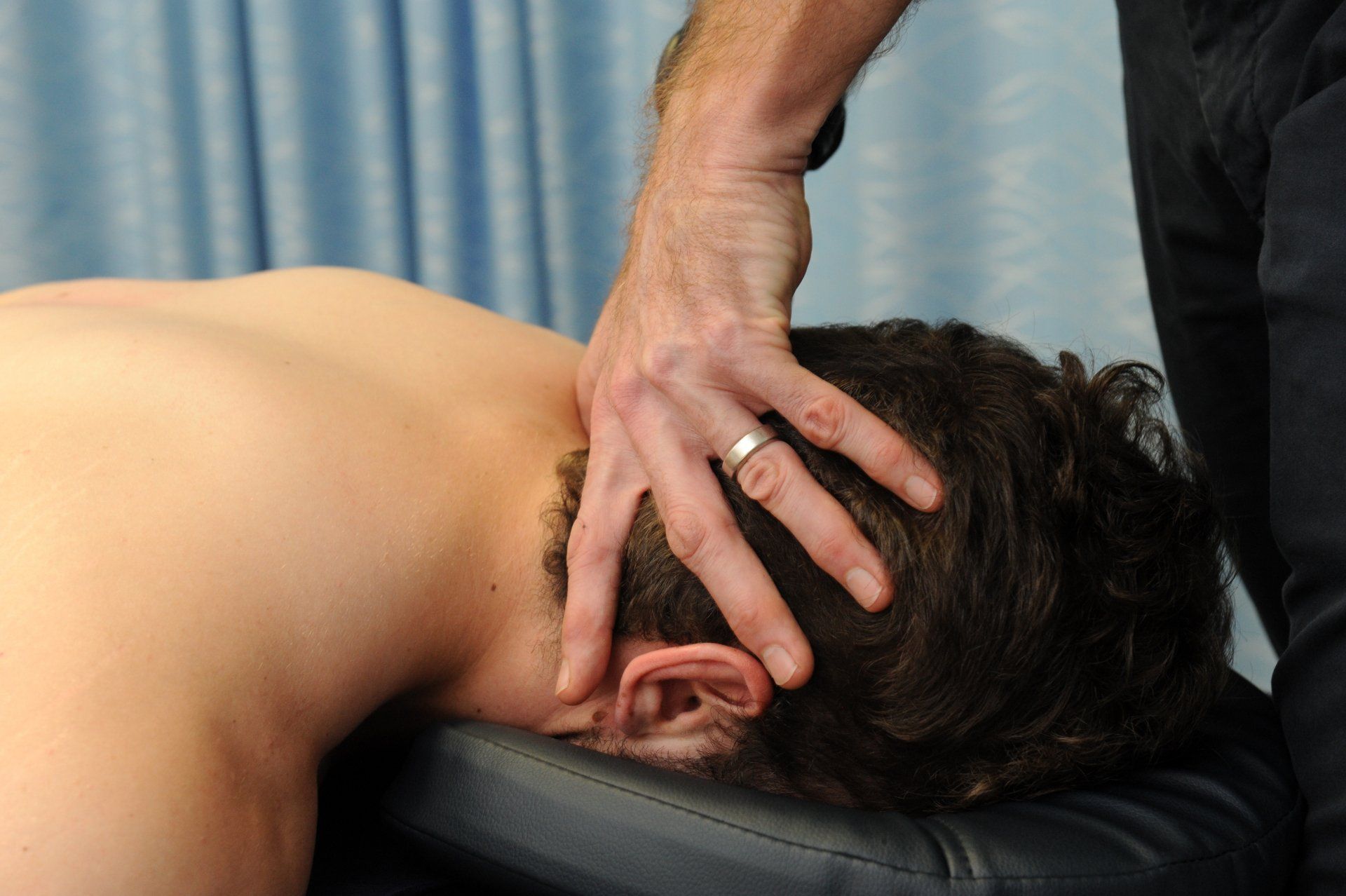
While most headaches can be well managed with minimal input from a health professional, some types of headaches respond well to physiotherapy intervention. In particular, tension-type headaches and headaches related to cervical spine injuries and/or degenerative changes in the neck, known as cervicogenic headache. For more information these types of headaches, click on the links below.
Tension-type Headache (external link)
For in-depth information on types of headaches, head to The International Classification of Headache Disorders 3rd edition.
Do you have neck pain and a headache, or have symptoms of a tension-type headache?
Give us a call. We are part of a well-connected network of physiotherapists, massage therapists, doctors and surgeons
and can treat and manage cervicogenic and tension-type headache with a personalised, goal-oriented and comprehensive plan.
Call now on 08 8945 3799 or book online.
More articles