The Wrist - Carpal Tunnel Syndrome


Why night-time finger numbness might be worth assessing.
You've probably shaken your hand awake at 3am, or noticed your fingers going tingly halfway through a long drive or a big day at the keyboard, and told yourself it's nothing.
For a surprising number of people, it isn't nothing. It's Carpal Tunnel Syndrome (CTS) — one of the most common nerve conditions affecting the hand and wrist, and one that's remarkably under-recognised until it starts interfering with sleep, work, or your grip on your morning coffee.
Carpal Tunnel Syndrome happens when the median nerve — one of the main nerves running into your hand — becomes compressed as it passes through a narrow tunnel in your wrist. It affects roughly 14% of the population, making it one of the most common hand and wrist presentations physiotherapists see.
Here's the genuinely good news: for most people, Carpal Tunnel Syndrome responds well to conservative, physiotherapy-led treatment — particularly when it's identified and managed early. Surgery is only needed for a relatively small proportion of cases.
What Actually Is the Carpal Tunnel?
The carpal tunnel is a narrow passageway on the palm side of your wrist, formed by small wrist bones on one side and a tough ligament stretched across the top. Nine flexor tendons and one nerve — the median nerve — travel through this tight space.
Those nine tendons connect the muscles that bend your fingers, thumb and wrist to the bones in your hand. The median nerve, meanwhile, provides sensation to your thumb, index finger, middle finger and part of your ring finger, and helps control several of the small muscles involved in thumb movement and grip. Because the tunnel has very little room to spare, anything that adds bulk or pressure inside it can squeeze the nerve.
How Does It Happen? Understanding the Squeeze
Carpal Tunnel Syndrome develops when pressure builds up inside the tunnel, shrinking the space available for the median nerve. This can happen through swelling, thickening of the tendons, cyst development, or conditions like diabetes and rheumatoid arthritis that make the nerve more vulnerable to compression in the first place.
CTS can affect people of any age or occupation, but it shows up more often in people who do repetitive hand movements, prolonged gripping tasks, computer-based work or manual labour — and in those with certain underlying health conditions. Usually it's a combination of several contributing factors rather than one single cause.
Who's Most at Risk?
A number of factors are known to increase the pressure inside the carpal tunnel, or make the median nerve more susceptible to it:
- Repetitive hand and wrist movements, or forceful gripping activities
- Prolonged or awkward wrist positions — think keyboard and mouse work, or trade and manual handling tasks
- Pregnancy, due to fluid retention and hormonal changes
- Diabetes — CTS is significantly more common in people with type 1 and type 2 diabetes, and diagnosis and management can look a little different when both are present. You can read more on our diabetes page.
- Thyroid dysfunction and other inflammatory conditions, including rheumatoid arthritis
- A previous wrist injury
- Obesity
Women are affected at a notably higher rate than men, and pregnancy-related CTS is common enough that it's worth a specific mention — more on that in our FAQs below.
What Does It Feel Like? Recognising the Signs
Symptoms usually develop gradually, and may include:
- Tingling or numbness in the thumb, index and middle fingers
- Pain in the wrist, hand or forearm
- Symptoms that are noticeably worse at night
- Difficulty gripping objects
- Hand weakness
- Dropping items unexpectedly
- Reduced dexterity during fine motor tasks — buttons, jewellery, typing
Left untreated, persistent compression of the median nerve can lead to ongoing weakness and a lasting reduction in hand function — which is exactly why early assessment matters, even when symptoms feel mild or intermittent.
How Is It Diagnosed?
Diagnosis starts with a thorough assessment by a physiotherapist or other healthcare professional. The most recent clinical practice guideline for CTS, published in the Journal of Orthopaedic & Sports Physical Therapy in 2026, recommends assessment should include:
- A detailed history of your symptoms
- Evaluation of how your symptoms behave and how irritable they are
- A physical examination of the hand, wrist, neck and upper limb
- Assessment of strength, sensation and functional limitations, including specific hand tests for nerve compression
- Validated outcome measures and patient-reported questionnaires to track your progress over time
In some cases, nerve conduction studies or ultrasound may be recommended to confirm
the diagnosis or investigate how severe the compression is.
The Treatment That Actually Works
The 2026 guideline is clear that physiotherapy is a central part of conservative management for many people with Carpal Tunnel Syndrome — and that a forearm-based wrist splint worn at night is the recommended first-line treatment for mild to moderate cases. Beyond that first step, treatment should be individualised to your symptoms, goals, severity and functional limitations, and typically includes:
Education and Self-Management
Understanding what's driving your symptoms, which activities tend to aggravate them, practical strategies to reduce nerve irritation, a realistic recovery timeline, and the signs that would mean further medical assessment is needed.
Activity Modification and Ergonomic Advice
Adjusting your workstation setup, altering hand positioning during work tasks, taking regular movement breaks, reducing prolonged gripping activities, and improving lifting and handling technique. If your work involves long hours at a desk, this is often one of the highest-value changes you can make — our team can talk you through it as part of your physiotherapy assessment.
Therapeutic Exercise
Nerve glides, wrist and hand mobility exercises, tendon gliding exercises, grip strengthening, thumb stability work, forearm strengthening and functional retraining — all tailored to where your specific weakness and irritability sit.
Wrist Splinting
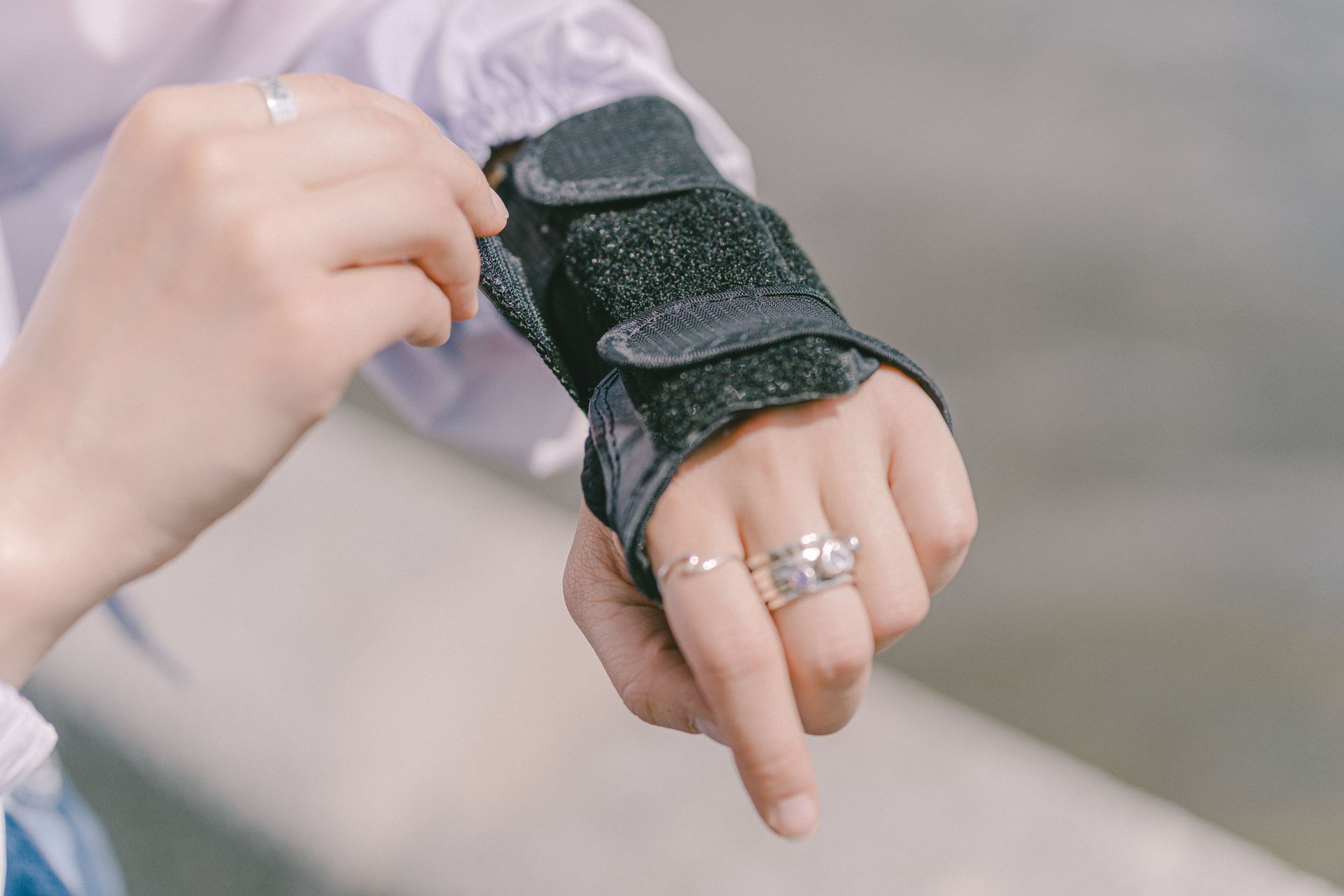
Wearing a wrist splint that holds the wrist in a neutral position, particularly overnight or intermittently through the day, is a simple and well-supported way to reduce symptoms while the rest of your program takes effect.
When Should You Seek Further Medical Advice?
While many people improve with conservative management, some situations warrant referral for further medical assessment. These include:
- Constant numbness, rather than symptoms that come and go
- Severe or worsening numbness
- Progressive weakness in the hand
- Muscle wasting around the base of the thumb
- Significant loss of hand function
- Symptoms that fail to improve despite appropriate treatment
In these cases, additional investigations or a surgical consultation may be recommended — and that's a completely normal part of the CTS journey for some people, not a sign that earlier treatment has failed.
Recovery and Prognosis
Recovery time varies from person to person, depending on:
- The severity of nerve compression
- How long you've had symptoms
- The physical demands of your workplace
- Any underlying health conditions
- How consistently you follow through on your treatment plan
Many people experience meaningful improvement through a combination of education, exercise, activity modification and splinting — and, for a smaller number, surgery.
The earlier CTS is identified and addressed, the more options you have and the better those options tend to work.
Don't Wait for It to Get Worse
Carpal Tunnel Syndrome tends to be progressive if it's ignored, but it's highly responsive to the right treatment — especially early on. If any of the symptoms in this article sound familiar, or you simply want to know what's going on with your hand or wrist, a physiotherapy assessment is the right place to start.
Carpal Tunnel Syndrome
Frequently Asked Questions
Ready to get on top of your symptoms?
At Movement for Life Physiotherapy, our team across Coconut Grove and Rosebery can assess your hand and wrist symptoms, confirm whether Carpal Tunnel Syndrome is the cause, and build a tailored plan to reduce your symptoms and protect your long-term hand function. You can read more about the full range of conditions we treat in The Treatment Room, or explore other wrist and hand related conditions here.
Give us a call now or click on BOOK AN APPOINTMENT to book online.
This article is general information only and does not replace individual clinical assessment. If you're experiencing joint or muscle pain, book an appointment with one of our physiotherapists for a tailored assessment and treatment plan.
Sources
- American Academy of Orthopaedic Surgeons. (2016). Management of carpal tunnel syndrome evidence-based clinical practice guideline. Retrieved from https://www.aaos.org/globalassets/quality-and-practice-resources/carpal-tunnel/carpal_tunnel_syndrome_cpg_10.31.16.pdf
- Atroshi, I., Gummesson, C., Johnsson, R., Ornstein, E., Ranstam, J., & Rosén, I. (1999). Prevalence of carpal tunnel syndrome in a general population. JAMA, 282(2), 153-158.
- Bland, J. D. (2007). Carpal tunnel syndrome. BMJ, 335(7615), 343-346.
- Erickson, M., Lawrence, M., Lazinski, M.J., Scott, K., & Martin, R.L. (2026). Hand Pain and Sensory Deficits: Carpal Tunnel Syndrome: Revision 2026. Journal of Orthopaedic & Sports Physical Therapy, 56(4), CPG1–CPG79.
- Huisstede, B. M., Hoogvliet, P., Rands, dorp, C. S., & Glerum, S. (2010). Carpal tunnel syndrome. Part I: effectiveness of nonsurgical treatments—a systematic review. Archives of Physical Medicine and Rehabilitation, 91(7), 981-1004.
- Kaplan, S. J., Glickel, S. Z., & Eaton, R. G. (1990). Predictive factors in the non-surgical treatment of carpal tunnel syndrome. The Journal of Hand Surgery: British & European Volume, 15(1), 106-108.
- Ostergaard, P. J., Meyer, M. A., & Earp, B. E. (2020). Non-operative treatment of carpal tunnel syndrome. Current reviews in musculoskeletal medicine, 13, 141-147.
- Padua, L., Coraci, D., Erra, C., Pazzaglia, C., Paolasso, I., Loreti, C., ... & Hobson-Webb, L. D. (2016). Carpal tunnel syndrome: clinical features, diagnosis, and management. The Lancet Neurology, 15(12), 1273-1284.
- Sevy JO, Varacallo M. Carpal Tunnel Syndrome. 2022 Sep 5. In: StatPearls [Internet]. Treasure Island (FL): StatPearls Publishing; 2023 Jan–. PMID: 28846321.
- Zimmerman M, Gottsäter A, Dahlin LB. Carpal Tunnel Syndrome and Diabetes—A Comprehensive Review. Journal of Clinical Medicine. 2022; 11(6):1674. https://doi.org/10.3390/jcm11061674
More articles