Waterproof Casts and Braces
Less itching, better hygiene, and no missed swimming lessons while your fracture heals.
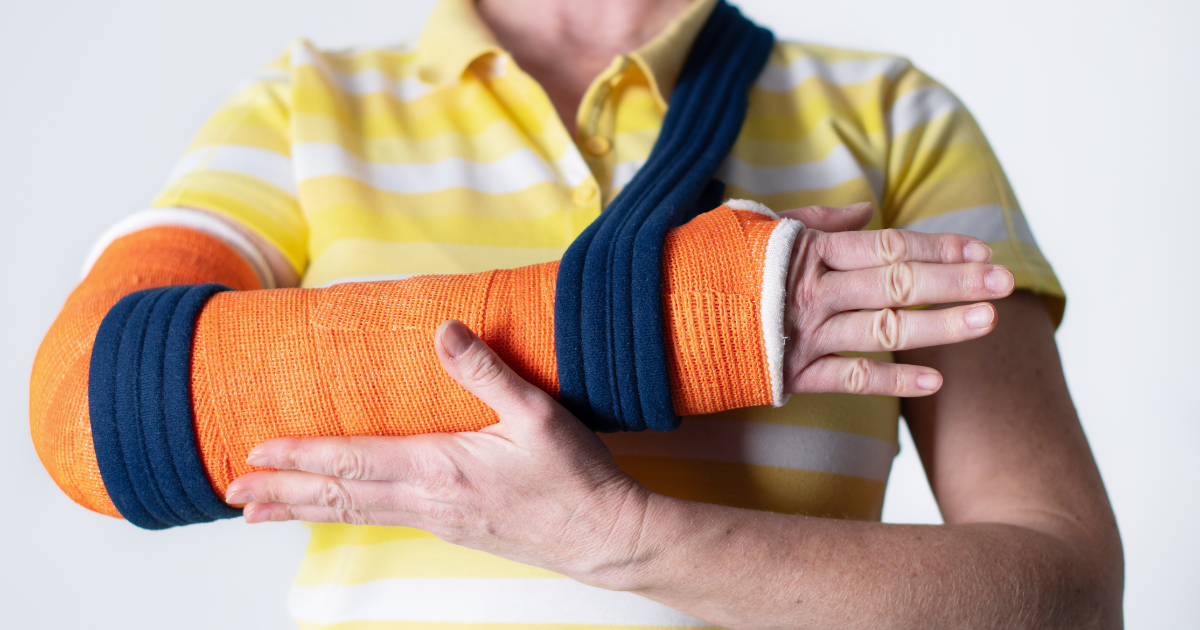
A broken bone shouldn't mean six weeks of itchy skin, plastic bags over your arm in the shower, and sitting on the sidelines at the pool. Thanks to modern casting materials, it doesn't have to.
Traditional plaster and cotton-padded fibreglass casts have one big limitation: they hate water. Get them wet, and the padding underneath stays damp for days, leading to itching, odour, and a genuinely higher risk of skin irritation and breakdown.
For Territorians dealing with heat, humidity and a lifestyle built around water,
that's a real problem, not just an inconvenience.
Here's the genuinely good news: waterproof casting materials and modern removable braces have changed what recovering from a fracture actually looks like. You can shower properly, keep swimming lessons going, and get on with life — all while your bone heals exactly as it should.
The Benefits of Waterproof Casts and Braces
Waterproof cast and brace systems solve the practical, everyday problems that make traditional casts so frustrating:
- Proper hygiene — you can shower, bathe and even swim, rather than wrapping your limb in plastic and hoping for the best.
- Less itching and odour — by keeping the padding underneath genuinely dry (not just covered), skin stays healthier and more comfortable for the full length of treatment.
- Fewer skin complications — trapped moisture against skin is one of the main drivers of irritation, breakdown and infection risk under a cast. Waterproof systems are specifically designed to avoid this.
- Uninterrupted rehab — waterproof casts and braces are compatible with hydrotherapy, so pool-based rehabilitation doesn't need to wait until the cast comes off.
- A normal life during recovery — for kids especially, missing a swim in the rockpools during the dry or cooling off in the pool during the wet season because of a broken arm is a genuine quality-of-life issue. Waterproof options mean recovery doesn't have to come at the cost of everything else.
- Removability where appropriate — some options (like the braces we cover below) can be taken off for skin checks, gentle exercise or brief hygiene breaks, under guidance from your treating clinician.
What Needs a Cast, and What Can Be Managed in a Brace?
This decision isn't really about patient preference — it comes down to the fracture itself, and it's made by your treating doctor, orthopaedic specialist or physiotherapist based on the imaging and stability of the injury.
As a general rule:
- A rigid cast is usually needed for fractures that are displaced, unstable, or at risk of moving out of position — for example, many distal radius fractures, forearm shaft fractures, and paediatric fractures that need close control while they heal. A cast holds the bone completely still and immobilises the joints above and below the injury, which is exactly what an unstable fracture needs.
- A removable brace is often appropriate for fractures that are stable, minimally displaced, or have already been reduced and are tracking well — think many stable distal radius fractures, boxer's fractures (a break at the neck of the 5th metacarpal, often from a punching injury), and some thumb injuries, including thumb UCL sprains (“skier's thumb” or “gamekeeper's thumb”).
Braces are also commonly used later in the healing process — for example, transitioning out of a rigid cast once a fracture is stable enough to allow a bit more protected movement, while still providing solid support.
At Movement for Life Physiotherapy, we're one of the few providers in Darwin offering a full plastering and splinting service for both upper and lower limb injuries — including waterproof casting and Exos brace fitting. You can read more on our physiotherapy page.
Delta-Dry: The Waterproof Cast Material We Use
When a rigid waterproof cast is the right option, we use Delta-Dry — one of the most well-established waterproof casting systems available, and the material we most commonly reach for.
Delta-Dry works differently to a standard cast. Instead of traditional cotton padding (which soaks up water and stays wet for days), it uses a two-part system:
- A water-resistant stockinette layer, applied directly against the skin.
- Delta-Dry waterproof padding, an open-knit material made from non-absorbent synthetic fibres, wrapped over the top.
- Standard fibreglass casting tape, applied over the padding as the rigid outer shell — so the strength and support of the cast is exactly what you'd expect from any fibreglass cast.
The clever part is in that open-knit structure. Rather than absorbing water like cotton, the fibres let water pass straight through and drain out both ends of the cast — usually within about 10 minutes if the limb is positioned to allow proper drainage after swimming or showering. From there, the material's high moisture vapour transmission rate lets your body heat evaporate any remaining moisture out through the cast, so the padding and your skin feel completely dry again within about an hour.
The result is a cast that can be fully submerged — in the shower, the bath, the pool, or the ocean — without the skin complications, odour and breakdown that come with a traditional cast getting wet. It's also soft and comfortable against the skin from day one, so it applies almost as easily as standard cast padding.
Enovis Exos Braces: A Smarter Option for Wrist and Finger Injuries
For a lot of stable wrist, hand and finger fractures, we use Enovis Exos braces instead of a traditional cast — sometimes called by their older brand name, DonJoy Exos. These are custom-moulded, removable braces that offer genuinely different advantages to a standard cast for the right injuries.
Here's what makes them worth considering:
- Custom-moulded fit — the brace material becomes pliable when heated in a specialised oven, and is then moulded directly onto your wrist, thumb or hand for a precise, individual fit — not a one-size-fits-all shell.
- Genuinely waterproof — you can shower, bathe and swim without a second thought, and the brace itself is easy to clean and keep hygienic.
- X-ray friendly — Exos braces are radiolucent, meaning you don't need to remove the brace (or be re-cast afterwards) for follow-up X-rays. That's fewer appointments and less disruption to your treatment.
- Adjustable as you heal — many Exos braces use the BOA Fit System, a dial-based mechanism that allows fine adjustment of compression as swelling goes up and down through recovery, rather than a fixed-width shell that can become too loose or too tight.
- Removable under guidance — unlike a rigid cast, an Exos brace can be taken off for supervised hygiene, skin checks, or specific gentle exercises as directed by your physiotherapist — while still going back on to protect the injury the rest of the time.
- Lightweight and breathable — a welcome difference for anyone who's worn a heavy, sweaty cast through a Darwin build-up.
They're particularly well suited to injuries like stable distal radius (wrist) fractures, boxer's fractures, and thumb spica-type injuries such as UCL sprains of the thumb — though as always, the right option for your specific injury is a decision made with your treating clinician.
Do's and Don'ts for Waterproof Casts and Braces
Do:
- Follow the specific drainage instructions you're given after swimming, bathing or showering — usually positioning the limb to let water run out, then allowing it to air dry.
- Pat the area dry where you can access it, and give the cast or brace time to fully dry before covering it with clothing, bedding or a splint cover.
- Keep an eye on your skin for redness, irritation or unusual odour, and mention anything that concerns you at your next review.
- Stick to your scheduled reviews — waterproof doesn't mean maintenance-free, and your clinician needs to check the fracture and the fit of the cast or brace as swelling changes.
- Keep up with any hydrotherapy or exercise program your physiotherapist has set for you — this is one of the genuine advantages of waterproof options, so make the most of it.
- Ask before removing an Exos brace for the first time — your physiotherapist will tell you exactly when and how it's safe to do so.
Don't:
- Don't assume waterproof means indestructible — avoid high-impact activities, contact sport, or anything that could damage the cast or re-injure the fracture unless you've been specifically cleared for it.
- Don't put powder, lotion or talc inside a cast or brace — it can trap moisture and irritate the skin, working against exactly what the waterproof design is trying to achieve.
- Don't poke anything down the inside of a cast to scratch an itch — it's a common cause of skin damage and infection, waterproof or not.
- Don't ignore worsening pain, numbness, tingling, swelling, or colour changes in your fingers or toes — these need urgent review, as they can signal too much swelling or pressure under the cast.
- Don't skip a rinse after swimming in chlorinated or salt water — residue left inside a waterproof cast can still contribute to skin irritation over time.
- Don't remove an Exos brace early or leave it off longer than instructed, even though it's designed to come off — the protection only works if it's actually being worn as prescribed.
The Take Home
Waterproof casts and removable braces have genuinely changed what recovering from a fracture looks like — less itching, better hygiene, uninterrupted rehab, and a lot less disruption to daily life, sport and swimming. But the right choice between a rigid cast, a waterproof cast, or a removable brace like Exos always comes down to your specific fracture and how it's tracking, not personal preference alone.
Waterproof Casts & Braces
Frequently Asked Questions
Sustained a fracture and want to know what your options are?
At Movement for Life Physiotherapy, our team can advise, apply and manage waterproof casts using Delta-Dry, and fit Enovis (DonJoy) Exos braces for suitable wrist, hand and thumb injuries — all onsite, without the wait at a hospital fracture clinic. Find out more on our physiotherapy page, or book online to get your fracture assessed and managed properly from day one. You can read more about the full range of conditions we treat in The Treatment Room.
Give us a call now or click on BOOK AN APPOINTMENT to book online.
This article is general information only and does not replace individual clinical assessment. If you're experiencing joint or muscle pain, book an appointment with one of our physiotherapists for a tailored assessment and treatment plan.
Sources
- Blomstrand, J., Sellbrant, I., Nellgård, B., Karlsson, J., Fagevik Olsén, M., & Kjellby Wendt, G. (2025). Removable brace is as good as plaster cast after surgically treated distal radius fracture–a randomised controlled study of pain and wrist function. Journal of Orthopaedic Surgery and Research, 20(1), 691.
- BSN Medical. (n.d.). Delta-Dry water resistant undercast padding. CME Corp. https://www.cmecorp.com/bsn-medical-delta-dry-water-resistant-undercast-padding.html
- Enovis. (n.d.). Exos. https://enovis.com/our-brands/exos
- Enovis. (n.d.). Exos upper extremity – Patients. https://enovis.com/our-brands/exos/upper-extremity/patients
- Enovis. (n.d.). Wrist brace with BOA. https://enovis.com/products/exos/wrist-brace-boa
- Guillen, P. T., Fuller, C. B., Riedel, B. B., & Wongworawat, M. D. (2016). A prospective randomized crossover study on the comparison of cotton versus waterproof cast liners. Hand, 11(1), 50–53.
- Haley, C. A., DeJong, E. S., Ward, J. A., & Kragh, J. F. (2006). Waterproof versus cotton cast liners: A randomized, prospective comparison. American Journal of Orthopedics, 35(3), 137–140.
- Halanski, M., & Noonan, K. J. (2008). Cast and splint immobilization: Complications. Journal of the American Academy of Orthopaedic Surgeons, 16(1), 30–40.
- Kearney, R., McKeown, R., Parsons, H., Haque, A., Parsons, N., Nwankwo, H., Mason, J., Underwood, M., Redmond, A. C., Brown, J., Kefford, S., & Costa, M. (2021). Use of cast immobilisation versus removable brace in adults with an ankle fracture: Multicentre randomised controlled trial. BMJ, 374, n1506.
- Mohseni, M., Sina, R. E., & Graham, C. (2024). Ulnar Collateral Ligament Injury (Gamekeeper's Thumb). In StatPearls [Internet]. StatPearls Publishing.
- OrthoTape. (n.d.). Delta Dry waterproof long arm cast kit – Swim cast liner. https://orthotape.com/products/delta-dry-waterproof-long-arm-cast-cast-kit
- Poolman, R. W., Goslings, J. C., Lee, J. B., Statius Muller, M., Steller, E. P., & Struijs, P. A. (2005). Conservative treatment for closed fifth (small finger) metacarpal neck fractures. Cochrane Database of Systematic Reviews, 2005(3), CD003210.
- Robert, C. E., Jiang, J. J., & Khoury, J. G. (2011). A prospective study on the effectiveness of cotton versus waterproof cast padding in maintaining the reduction of pediatric distal forearm fractures. Journal of Pediatric Orthopaedics, 31(2), 144–149.
- Schumaier, A., Zeng, F., & McCarthy, C. (2025). Surgical Management of Thumb Ulnar Collateral Ligament Injuries: A Systematic Review and Meta-analysis of 614 Patients With a Minimum 1 Year Follow-up. JAAOS Global Research & Reviews, 9(5), e25.
- Sellbrant, I., Blomstrand, J., Karlsson, J., Nellgård, B., & Jakobsson, J. (2022). Brace versus cast following surgical treatment of distal radial fracture: A prospective randomised study comparing quality of recovery. F1000Research, 10, 396.
- Stevenson, A. W., Gahukamble, A. D., Antoniou, G., Pool, B., Sutherland, L. M., & Cundy, P. (2013). Waterproof cast liners in paediatric forearm fractures: A randomized trial. Journal of Children's Orthopaedics, 7(2), 123–130.
- Yang, Y., et al. (2024). Biobased polyester versus synthetic fiberglass casts for treating stable upper limb fractures in children: A randomized controlled trial. BMC Musculoskeletal Disorders, 25, Article 33.
More articles