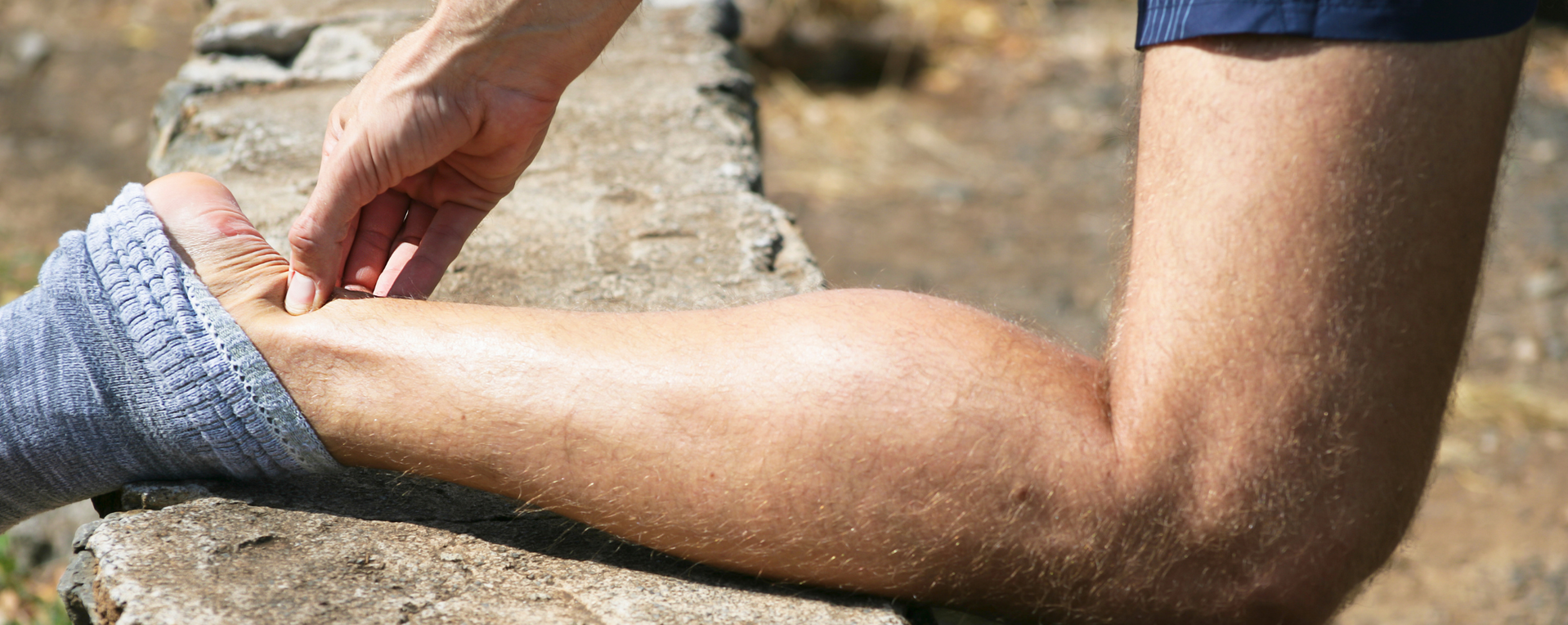
Running injury keeps coming back? Could changing how you run help?
Gait re-training may help some runners with persistent lower-limb injuries by changing how load is distributed with each stride.
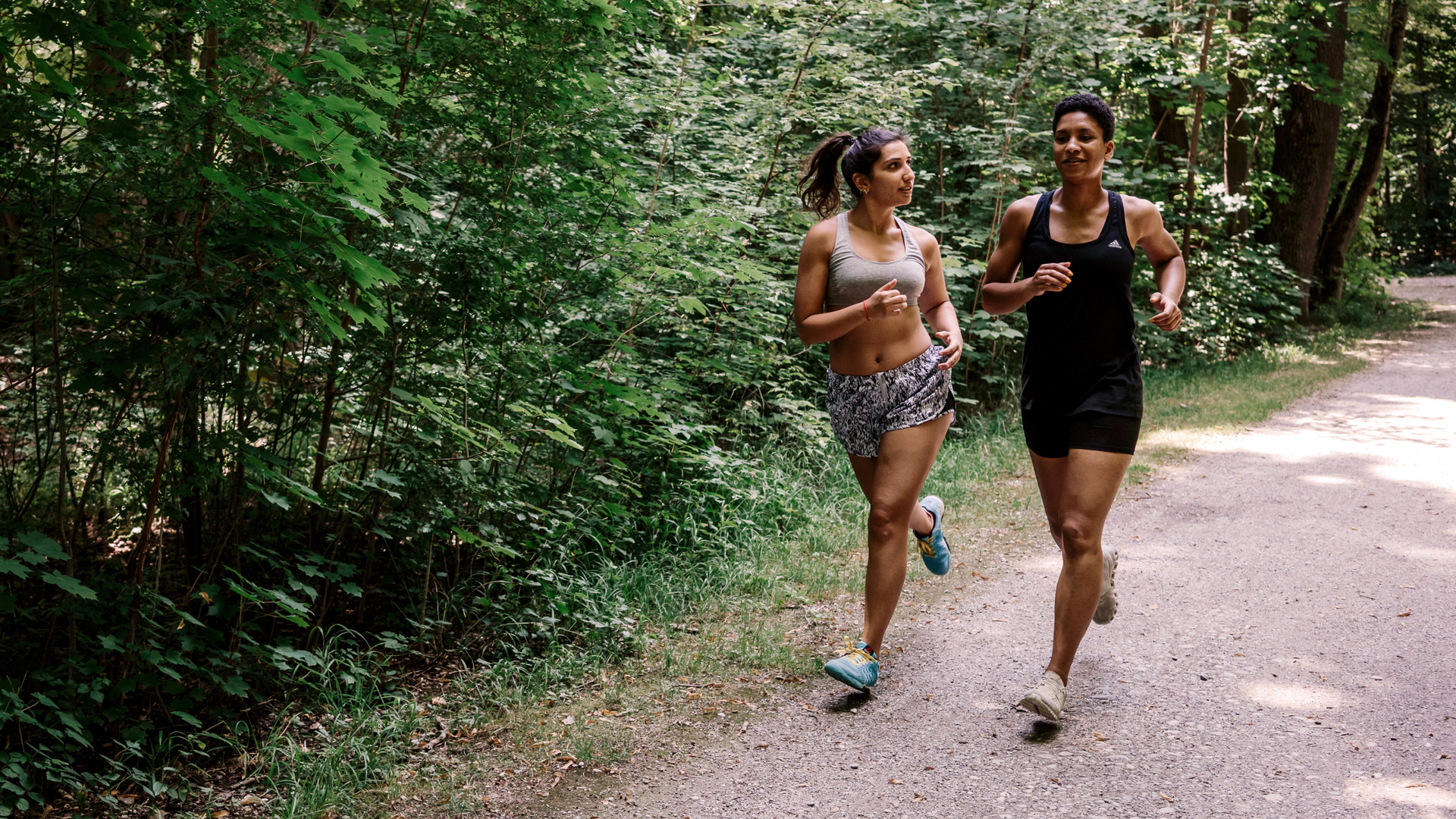
Running injury keeps coming back?
Most running injuries improve with a combination of sensible training-load adjustments, targeted strength work and a gradual return to running. But recovery is not always straightforward. If your knee, shin or hip pain keeps returning as soon as you build your running back up — despite making changes to your training and rehabilitation — it may be worth looking at another part of the picture: how you run.
For some runners with persistent injuries, gait re-training may be a useful addition to their rehabilitation.
Gait re-training involves making small, deliberate changes to running technique to alter how forces are distributed through the lower limb. It is not necessary for every runner, and it is most useful when an individual assessment identifies a reason to consider it.
Why do some running injuries keep coming back?
Managing a running injury involves more than simply resting until the pain settles. Three factors are often considered together:
- Training load: how much, how often and how intensely you run, and how quickly that load changes.
- Physical capacity: the strength and capacity of your muscles, tendons and other tissues to tolerate the demands of running.
- Running mechanics: how forces are distributed through your body with each stride.
Reducing or adjusting training load can help manage the amount of stress your body accumulates. Strength work can improve your capacity to tolerate that stress.
Gait re-training addresses a different factor: it may change where or how some of the load is applied with each step.
This does not mean that running technique is the cause of every injury. Persistent symptoms can have several contributing factors, and changing your stride is not automatically the answer.
What is gait re-training?
Gait re-training involves making small, purposeful and coached changes to your running mechanics. The aim is to alter loading on a painful or overloaded structure, rather than to make your running look a particular way.
Possible changes include:
- Increasing cadence — taking slightly more steps per minute, usually with shorter steps while maintaining the same running speed.
- Reducing overstriding — avoiding landing with the foot excessively far in front of the body.
- Adjusting aspects of foot placement or the way the foot contacts the ground, when assessment indicates this may be useful.
These adjustments can influence the forces travelling through the hip, knee, ankle and foot with each stride. The most appropriate change depends on the runner, their symptoms and their current running pattern.
Who can benefit from gait re-training?
Gait re-training is not needed for every runner or every running injury. It is best considered as a targeted treatment option for selected runners whose symptoms have not adequately improved with appropriate load management and strengthening, and where assessment identifies a potentially modifiable running pattern.
It may be considered for some problems involving how load is distributed through the lower limb, including:
- Patellofemoral pain (pain around or behind the kneecap).
- Some shin and bone-stress presentations.
- Selected hip and other lower-limb soft-tissue injuries.
Research has also identified recurring movement patterns in some runners with particular soft-tissue injuries. However, these patterns should not be treated as a universal diagnosis or a reason to change every runner’s technique. The decision needs to be based on an individual assessment, including the nature of the injury and the runner’s goals.
How can gait re-training help?
Gait re-training may help by changing the way forces are distributed during running. For example, a modest increase in step rate can reduce some measures of loading at the knee and may be useful for some runners with patellofemoral pain.
The research is encouraging, but the effects depend on the injury, the change being made and the individual. A gait modification that is helpful for one runner may be unnecessary or unsuitable for another. Gait re-training is generally considered alongside—not instead of—appropriate training-load management and strengthening.
What does the research say?
Studies have reported improvements in running mechanics, pain and function following gait re-training in some runners with patellofemoral pain. One study found that a 10% increase in step rate improved running kinematics and clinical outcomes, with benefits maintained at follow-up.
Reviews have also found that increasing step rate can reduce certain impact-loading measures. In novice distance runners, a structured gait-retraining program designed to reduce impact loading was associated with fewer running injuries over the following year than in runners who did not complete the program.
These findings support gait re-training as a credible option for selected lower-limb running injuries. They do not establish that one running pattern is ideal for everyone, or that gait re-training can prevent all running injuries.
Will I have to completely relearn how to run?
No. Effective gait re-training usually involves small, specific changes rather than a complete overhaul of your running style.
A physiotherapist may identify one potential adjustment — such as a modest change in cadence — and help you practise it progressively. Feedback might include a metronome, music set to an appropriate beat, or video feedback. The aim is to find the smallest useful change and allow your body time to adapt.
Changing too much, too quickly can create new problems by shifting load elsewhere before your body is ready. This is why changes should be selected and progressed carefully, rather than copying a technique from an online video or applying a generic cadence target.
How long does it take to change your running technique?
Gait re-training is a process, not an instant fix. A new movement pattern takes repetition before it starts to feel natural, and your tissues need time to adapt to any change in loading.
Some runners may notice changes in symptoms over the first few weeks, while developing a more consistent running pattern can take several weeks or months of regular, progressive practice. The timeframe varies with the injury, the individual, the change being practised and how consistently it is incorporated into training.
Progress should be guided by symptoms and function. The aim is to improve your ability to run, not simply to achieve a particular step rate or running style.
When should you have your running assessed?
A physiotherapy assessment may be worth considering if:
- Your running injury repeatedly returns when you increase distance, speed or training frequency.
- Your symptoms are not settling despite appropriate changes to training load and strengthening.
- Pain is limiting your ability to return to your usual running routine.
- You want to understand whether your running mechanics may be contributing to your symptoms.
A running assessment can consider your injury history, training demands, strength, symptoms and running pattern. If gait re-training is appropriate, your physiotherapist can help identify a suitable adjustment and build it into a broader rehabilitation plan. If it is not indicated, the assessment can help direct attention to other relevant factors.
Frequently Asked Questions
Get back to running with confidence
If your running injury keeps returning or is not responding to your usual rehabilitation, a running assessment may help identify what is contributing to your symptoms.
At Movement for Life Physiotherapy, we provide individualised physiotherapy assessment and rehabilitation, including running and gait analysis where appropriate. We can help you understand your injury, identify relevant factors and develop a plan to work towards returning to the running you enjoy.
Call us on 08 8945 3799 or click on BOOK AN APPOINTMENT to book online.
Related information
You may also find these Movement for Life Physiotherapy resources useful:
About this article
This article provides general information only and does not replace individual clinical assessment or advice. Whether gait re-training is appropriate depends on your symptoms, injury and running assessment. If you experience sudden severe pain, an inability to bear weight, or symptoms that are rapidly worsening, seek appropriate medical assessment.
Sources
- Barton, C. J., Bonanno, D. R., Carr, J., Neal, B. S., Malliaras, P., Franklyn-Miller, A., & Menz, H. B. (2016). Running retraining to treat lower limb injuries: A mixed-methods study of current evidence synthesised with expert opinion. British Journal of Sports Medicine, 50(9), 513–526. https://doi.org/10.1136/bjsports-2015-095278
- Bramah, C., Preece, S. J., Gill, N., & Herrington, L. (2019). A 10% increase in step rate improves running kinematics and clinical outcomes in runners with patellofemoral pain at 4 weeks and 3 months. The American Journal of Sports Medicine, 47(14), 3406–3413. https://doi.org/10.1177/0363546519879693
- Chan, Z. Y. S., Zhang, J. H., Au, I. P. H., An, W. W., Shum, G. L. K., Ng, G. Y. F., & Cheung, R. T. H. (2018). Gait retraining for the reduction of injury occurrence in novice distance runners: 1-year follow-up of a randomized controlled trial. The American Journal of Sports Medicine, 46(2), 388–395. https://doi.org/10.1177/0363546517736277
- Anderson, L. M., Bonanno, D. R., Hart, H. F., & Barton, C. J. (2022). The effectiveness of gait retraining on running kinematics, kinetics, performance, pain, and injury in distance runners: A systematic review with meta-analysis. Journal of Orthopaedic & Sports Physical Therapy, 52(7), 440–A11. https://doi.org/10.2519/jospt.2022.10585
- Lenhart, R. L., Thelen, D. G., Wille, C. M., Chumanov, E. S., & Heiderscheit, B. C. (2014). Increasing running step rate reduces patellofemoral joint forces. Medicine & Science in Sports & Exercise, 46(3), 557–564. https://doi.org/10.1249/MSS.0b013e3182a78c3a
- Bramah, C., Preece, S. J., Gill, N., & Herrington, L. (2018). Is there a pathological gait associated with common soft tissue running injuries? The American Journal of Sports Medicine, 46(12), 3023–3031. https://doi.org/10.1177/0363546518793657
- Napier, C., Cochrane, C. K., Taunton, J. E., & Hunt, M. A. (2015). Gait modifications to change lower extremity gait biomechanics in runners: A systematic review. British Journal of Sports Medicine, 49(21), 1382–1388. https://doi.org/10.1136/bjsports-2014-094393
More articles